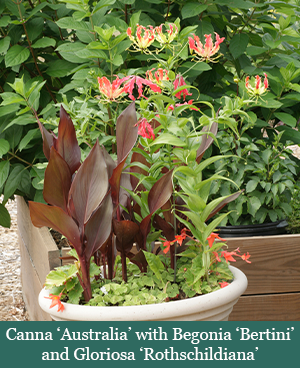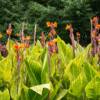




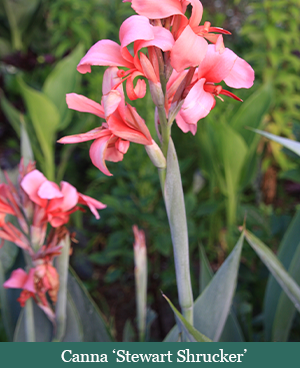
Have you ever tried growing Cannas? These mega-vibrant summer-blooming bulbs look spectacular in garden beds, containers, mixed arrangements, and even ponds! Cannas are tropical plants native to South America and Asia—however, the “golden Canna” is an aquatic form that is native to Florida. They bring a spectacular mass of color for an affordable price, with their incredibly vivid flowers and remarkable foliage.
Why We Love Growing Cannas Outdoors
The leaves of this popular tropical plant grow tall and quickly! They’re often quite colorful with delicate striations that add beautiful dimension and texture to the scenery. Cannas are winter hardy from zone 7-10, so in warmer regions of the United States, they can be grown as perennials, but cooler regions can grow them as annuals. Pollinators love them—especially hummingbirds!
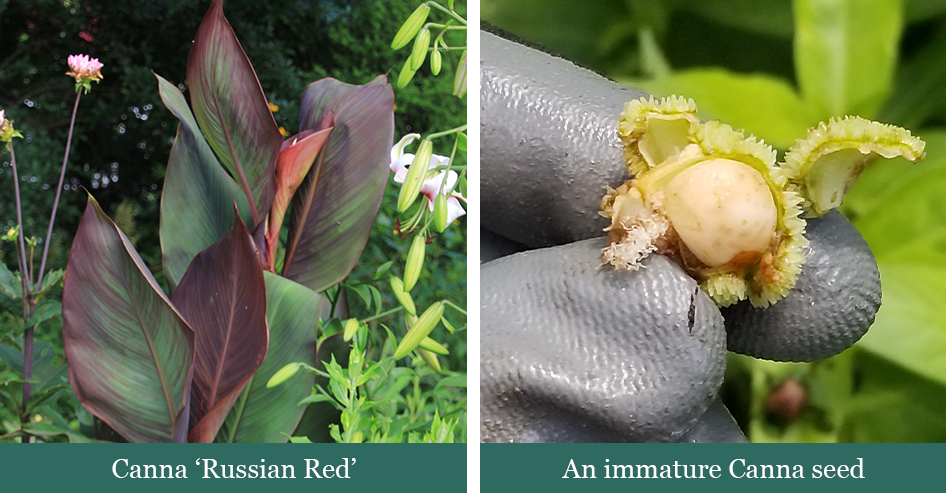
Fun Fact: Cannas have remarkably large, hard seeds that have been used as a substitute for pellets—like buckshot—in a shotgun shell. They’re also used as decorative beads for creating jewelry.
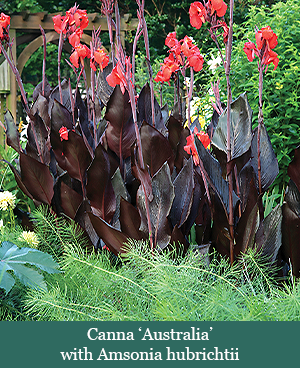
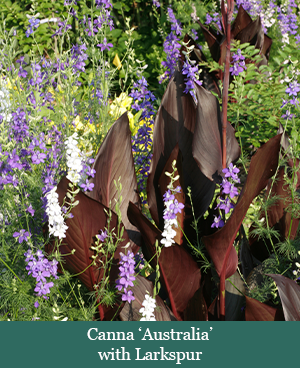
The dark leaves of Canna ‘Australia’ give the illusion of a shadow in an otherwise very sunny spot. They almost make you feel cooler by balancing those bright, sunny days with a swathe of dark, rich color.

Planting Your Cannas
The ideal site to plant your Cannas is in rich soil and full sun. They love summer heat and humidity and appreciate ample moisture while growing. You can even grow them as water garden plants by putting them in pots and submerging them in the pond. For most areas in USDA Zones 6 and lower, Cannas grow very happily during the summertime when nearly all of us are experiencing warm temperatures and humidity.


Cannas in the Winter
During their winter dormancy, Cannas prefer to sleep in a “dry bed.” They want a well-drained site, ideally with some protection, such as a layer of mulch; this is particularly useful in Zone 7 to help protect your plants’ roots from unusually freezing temperatures. In colder climates—Zones 6 and below—you can gently dig up your Canna rhizomes and store them in a dry, frost-free area during the winter months. If they are grown in containers, those containers can just be moved into a frost-free storage place for the winter.
The Canna’s leaves can become a bit tattered by windy weather and insect damage. We just cut back the ugly leaves, and new ones will sprout back again. Deadheading the spent flowers on many Cannas will promote reblooming—and as with all other flowering plants, it saves 30% of the energy it would have spent on seed production.
Are you looking to order Cannas for your US garden? In early January of 2023, We will be ready to take orders for a magnificent selection of Cannas in a stunning spectrum of colors. You’ll love the versatility and vibrancy of these fast-growing flowers, and the bees, butterflies, and hummingbirds will love them, too!