

There aren’t many flowers that grow from bulbs that are native to the U.S. that are commercially available. The ones that are native and are available are found in our western states.
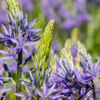
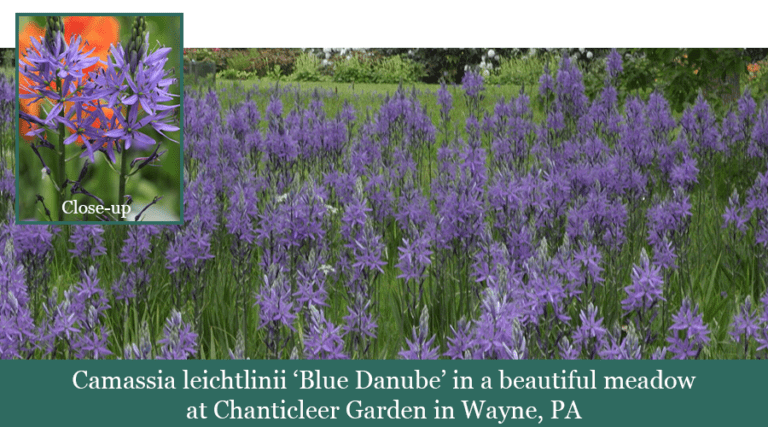
They have become some of our favorites. While they are very suitable for meadows, they seem adaptable in our eastern gardens, too! They normally don’t bloom during our Spring season nor during the Summer, but somewhere in between. We have nicknamed these and other flowers that bloom in between major seasons, ‘Bridge Flowers’ – bridging the gap between the two seasons. Camassia is probably the most famous of the Native bulbs because of a young Native American, ‘Sacajawea’, who fed cooked ‘camas’ to Lewis and Clark when food was scarce during their exploration. Camassias are pollinator friendly and are available in blue, white, pale pink. They are hardy in zones 3-8, tolerates damp soil and pond edges as well as heavy clay soils.
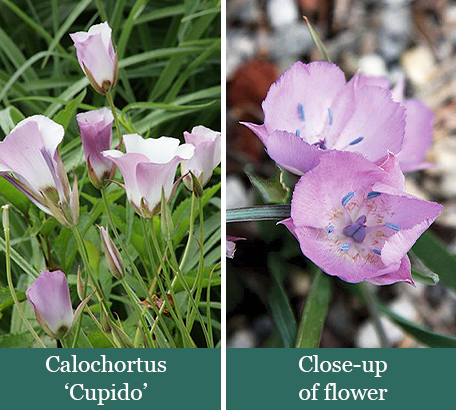
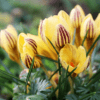
Calochortus is another flower grown from a bulb native to the western part of the U.S., found mainly in California. Calochortus prefer to grow in a sunny well-drained location where there is enough moisture during the winter and spring but needs a dry summer. This is another ‘Bridge Flower’, blooming between the Spring and Summer seasons.
Their lovely cup-shaped flowers and 3”-6” grass-like leaves may cause you to mistake it for a species tulip. Calochortus stems are thin and strong but certainly not rigid as they appear to ‘flutter’ in the breeze, resembling butterflies frolicking in the garden. Calochortus is a pollinator friendly flower and is hardy in zones 6-10.

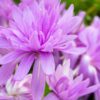
Dichelostemma, another Native pollinator-friendly plant, hardy in zones 5-8, are some of the best ‘dancers’ in the garden. Their 18”-24” stems are long, thin but not rigid and the slightest breeze causes them to sway. When it’s windy, you might think there is a ‘Rock Band’ near by as they swing back and forth, dipping and turning.
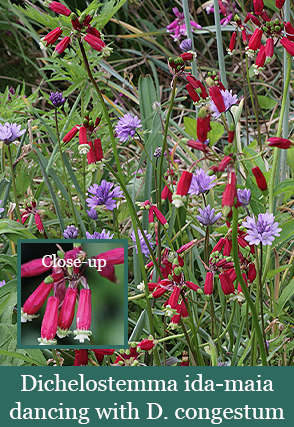
It’s quite a happy site! The happy flowers of Dichelostemma congestum are silver dollar sized lavender flowers that open and are quite lovely. Its cousin, Dichelostemma ida-maia, appear to form a cluster of red flower buds that never seem to open, looking more like firecrackers for July 4th than something in the garden or meadow. But they dance with D. congestum or any other partner they can find. And they don’t mind dancing alone if the wind is blowing and they are the only dancer around!

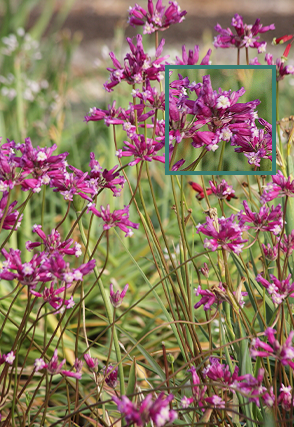
A ‘sister’ to Dichelostemma ida-maia is one called ‘Pink Diamond’, for obvious reasons. This beauty also loves to sway and dance in the breeze. The image on the right shows that there were earlier blooming flowers, but D. ‘Pink Diamond’ is the only ‘star of the show in this garden. However, the image on the left shows Calochortus and all the Dichelostemma dancing together.
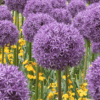
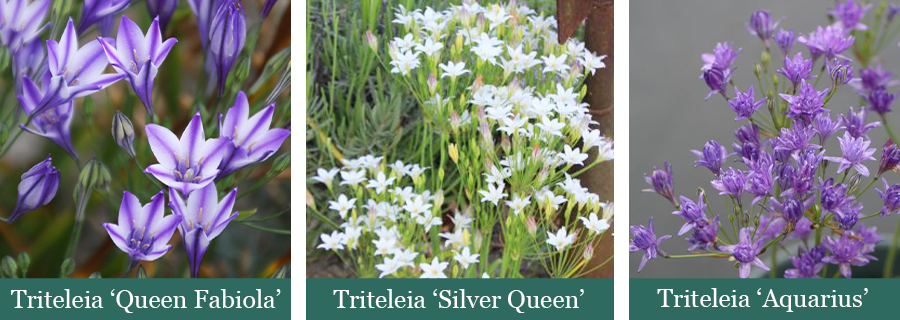
Triteleia is a Native bulb, hardy in zones 5-9 and is sometimes referred to as Brodiaea. Each cultivar has many umbels of up-facing, bell-shaped flowers on strong but dancing stems. Their leaves often shrivel before the flowers appear. They prefer full sun to partial shade and require super good drainage during the summer months. When you consider that these wonderful Native bulbs originate mostly in the Pacific Northwestern part of the U.S. where most of their precipitation happens during the winter and spring months and normally has very dry summers, it makes sense that these lovely treasures will want to be planted in places that make them feel at home! Think BERMS and RAISED BEDS!
Take a look at our fall-planting catalogue to see what we have available now!