

Watering is one of the most primary, essential tasks for growing a garden, but it can cause confusion. After all, every garden is different! To understand how to best water your garden, we’ve covered all the basics below.
Here Are Three Facts About Watering Bulbs:
- Most flower bulbs perform best with adequate or optimum moisture prior to and after blooming.
- Most flower bulbs prefer to sleep (lay dormant) in a dry bed.
- Most flower bulbs perform their best in soil that is well-drained but holds adequate moisture.
This time of year, watering your garden is important when rainfall totals are less than ½ inch a week. If you need to water your garden, a deep watering once a week is better than a brief drink every day—the soil surface can dry out quickly in our hot summers! Deep watering is when the moisture reaches 8-10 inches deep. The roots of the plants can reach down where the soil remains moist longer after a good, long rain or a deep, thorough watering.
Tools for Watering the Garden
There are many types of tools available to help with watering your plants. Where you are gardening may influence what tool you choose.
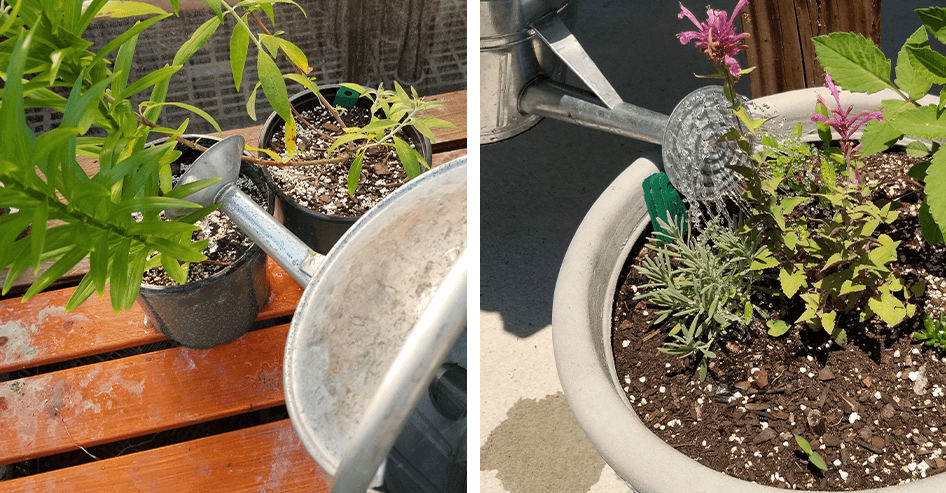
If most of your plants are in small pots or containers, a watering can may be all you need to keep their thirst quenched. Containers with holes are important so the excess water can drain. A shallow saucer to catch a small amount of excess water will enable the soil in your container to wick up moisture when needed.
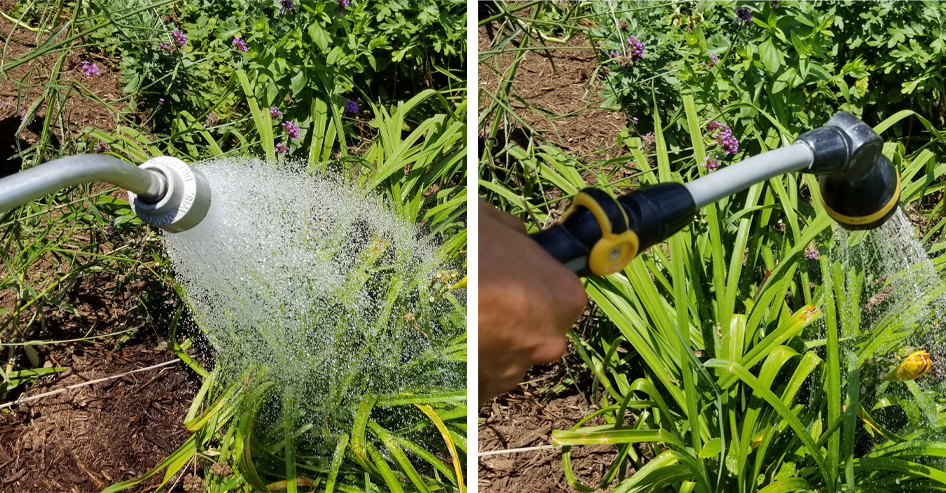
If you have a small flower border that isn’t too wide, a small hand-held watering wand may be all you need to water your plants.
If you have a larger flower border, a longer-handled watering wand may help you reach the plants at the back of the garden. A wand with an adjustable watering head is helpful because small plants appreciate a softer stream of water, and tiny seedlings appreciate a misting of water.

If you have a larger garden, sprinklers like the one pictured on the right—which you can barely see “in action” in the left image—are very helpful. We also suggest using drip irrigation, but only the type you can control yourself, so you only water when necessary. However, there is also some amazing new irrigation technology where moisture sensors in the soil determine when the irrigation should turn on and off automatically. Most new irrigation systems can be managed from your phone, so you don’t have to be at home to take care of your plants!

Whether you grow your plants in containers or you have a sprawling 2-acre garden, once your garden is planted and watered, it helps to add mulch. Mulch helps conserve that moisture while also helping to deter weed seed germination.
Understanding Soil Types
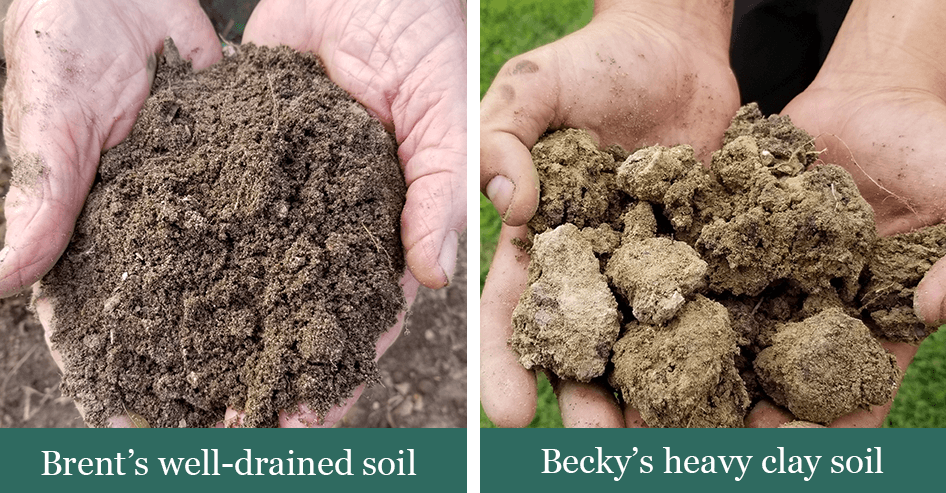
Brent’s garden is at our home. The soil there is ‘sandy/loam’ and very well-drained. Becky gardens one mile from their home at their business, Brent and Becky’s, where the soil 4–6 inches down is hard clay—almost like concrete. When Brent needs to water his garden and forgets to turn it off for a couple of hours, the water just drains right through.
In Becky’s garden, the top few inches of soil gets saturated in about 30 minutes, and if the sprinkler isn’t moved, a stream of water runs in the middle of the path, creating a “mini-river.” Becky has a timer to help be reminded when to move the sprinkler, and she needs to water more often.
Brent adds compost to his soil to help hold the moisture in his well-drained soil. Becky puts about 6 inches of compost on top of her soil to add nutrients, so the plants will not just survive but thrive.

There are so many types of soil. Our main message is to get to know your soil and how it retains moisture. Remember to avoid shallow watering! Plant roots need air as well as water—too much water can drown them. We all love our plants, so try your best not to “kill them with kindness!”