

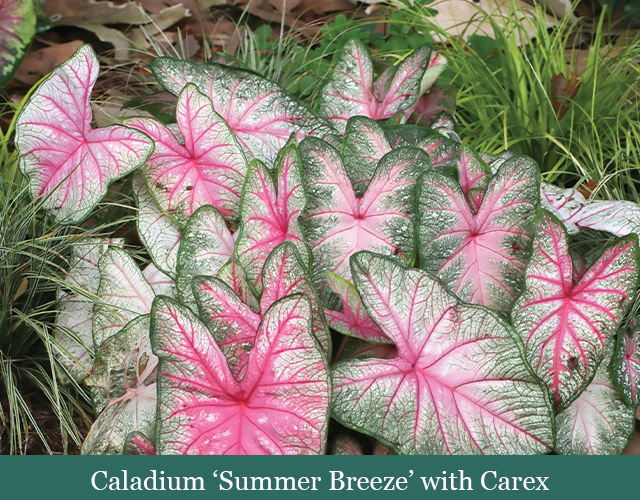
Caladiums—also known as “Angel Wings,” or one of the many plants nicknamed “Elephant Ears”—are one of the showiest and most colorful tropical bulbs in our summer gardens. They are native to South America—mainly Brazil! They are one of the most shade-tolerant plants and add bright colors alongside the Hosta, Carex, Ferns, Hellebores, Heuchera, and other shade-loving perennials.
Caladiums are relatively critter-resistant but not critter-proof. Slugs and snails seem to enjoy their leaves, but most other animals usually avoid their strong taste—at least, in our experience.
Caladiums are tropical summer bulbs, winter-hardy to zones 10–12. However, so much of our continental United States has enough heat and humidity during the warmer seasons that Caladiums perform as if they are right at home during our long, hot, humid summers.
It is safe to plant Caladiums outside in the garden once the soil temperature has reached 70°F or warmer and when the night time temperatures don’t fall below 70°F. Avoid planting them in cold soil, as this often leads to rot!
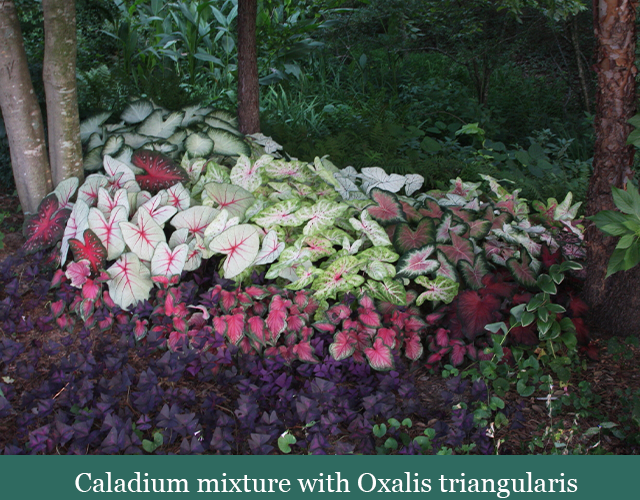
The lighter-colored varieties sure do lighten up those dark, shady spots in the garden—don’t you agree?
If you live in an area where hot summer temperatures are slow to arrive, you can get a head start by planting your Caladiums indoors in pots. Then, you can plant them out in the garden when the soil and nighttime temperatures are warm enough.


Sometimes, Caladium tubers are kind of funny looking. Normally, their bottom side is relatively flat or at least has fewer bumps than the top side, which is often where their “eyes” develop. If you are in doubt, plant the tuber on its side, like you would when putting dinner plates in the dishwasher. The roots will go down, and their sprouts will go up! Using a heat mat or some type of bottom heat conductor also helps them sprout and grow faster.
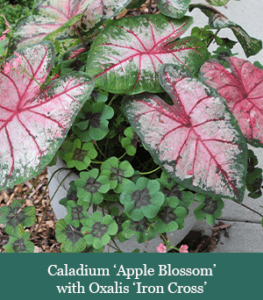
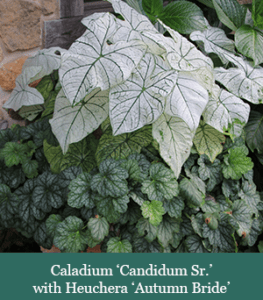
Caladiums are excellent container plants in large pots, around 3–15 gallons in size. You’ll get the best results if you plant them in a rich compost media that retains moisture. They don’t want to be in soggy soil, but they also don’t want to dry out.
Depending on where you live, the sun’s intensity, whether nighttime temperatures are much cooler than the daytime temperatures, and water availability, some of the newer Caladium varieties can withstand nearly full sun if they receive enough moisture.
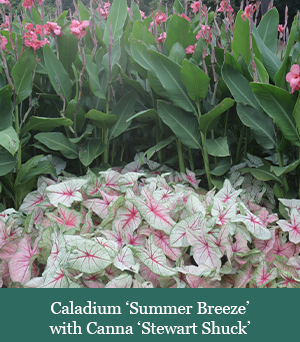
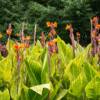
Cannas are wonderful full sun plants, and it may seem strange that Caladiums can be planted alongside them. However, the canna is tall enough to block some of the most intense afternoon western sunlight. Plus, they both love lots of water, so it’s easy to keep them both happy when they’re planted next to each other!
Caladiums are best treated as annuals if you live in an area that experiences a killing frost. If you wish to save them, you can move the pots to a warm, 70°F storage spot after the leaves begin to senesce. Alternatively, you can dig your tubers when the nighttime temperatures drop and your Caladiums’ leaves begin to fade in the fall. Dry the tubers and store them in a 70°F storage area. Do not wash the soil off the tubers—it has beneficial organisms that help to protect the bulbs in storage!
This time of year, the tubers may be difficult to find, as most are in the ground growing by now. It’s possible that your local garden center has small pots with Caladiums already growing and available for purchase.
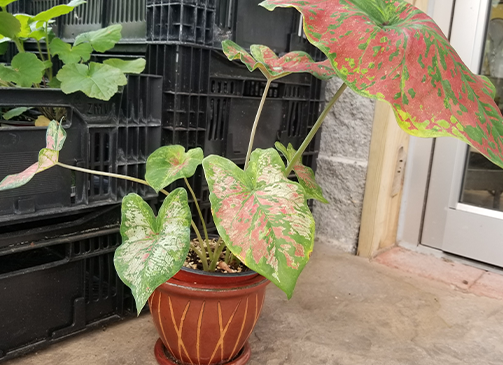
You may find some in decorative pots that are nice enough to place directly on your patio as soon as you get home, or perhaps there will be some designed arrangements that are ready to place in your own decorative container.
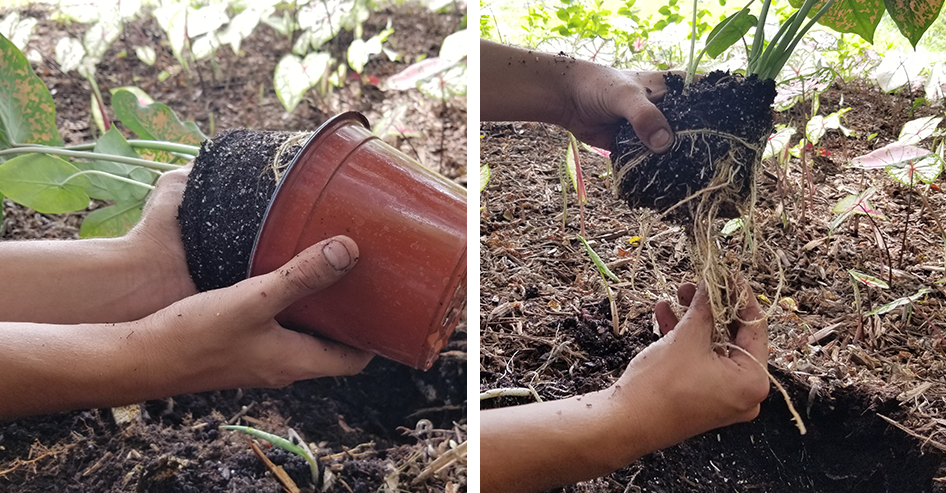
If you do find Caladiums growing in pots at your garden center, you have the opportunity to do something really fun—purchase the pre-grown Caladiums and transplant them right into your own garden! Here’s how to do it:
- Find the perfect shady location.
- Dig a hole about the same size as the pot.
- Gently take the whole plant—soil, roots and all—out of the pot.
- Gently uncurl the roots or encourage their roots to begin “spreading their wings.”
- Place it in the hole.
- Fill the rest of the hole with good compost and soil…voilà! You’ve got an instant tropical garden.
We love to play around in our gardens, and we hope you find joy in it, too!
To discover even more tropical tubers and beautiful blooming bulbs, browse our online bulb store to see what’s new and exciting!