


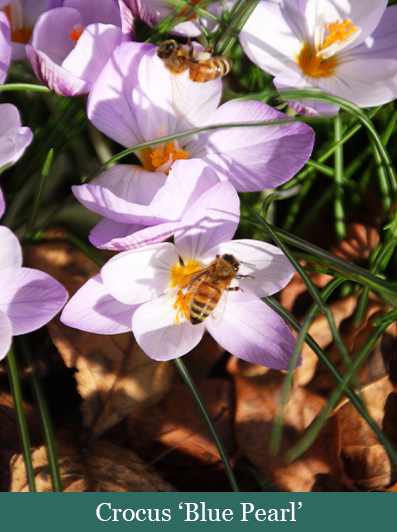

Crocus offer many distinctive types, sizes, and colors. They are one of the earliest bulbs to bloom in spring. When the temperatures rise above freezing in early spring, bees will begin searching for nectar to take back to the hive. Since Crocus are one of only a few flowers available, they help sustain the health of the hive until more native flowers are available later in the spring. We like to use them as ‘shoes and socks’ plants around the ankles of early-blooming larger bulbs. We always try to put as many plants in the garden as we can to cut down on weed germination.
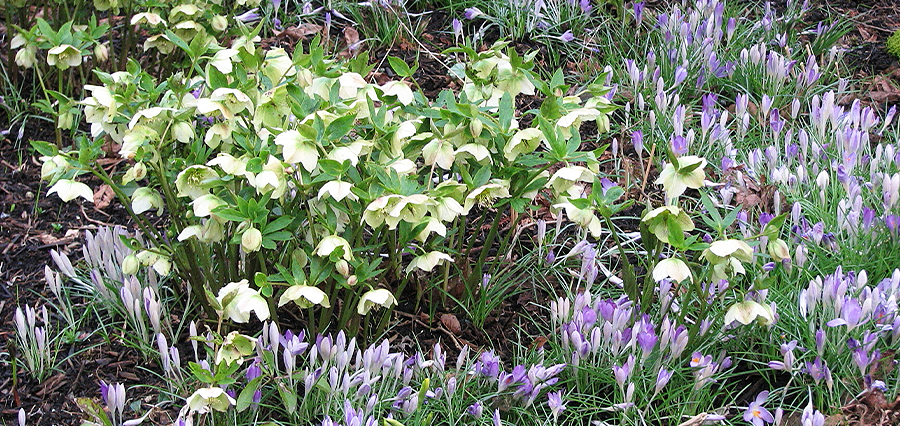
Crocus tommasineanus (tomma-sin-ee-AH-nus) is a “species Crocus,” which means it was found in nature without human intervention. It looks lovely in the garden with hellebores and other early-blooming flowers. We often expect a flower with one name to look exactly the same all the time, but as a species bulb, it is quite variable—as most species tend to be. The image on the right shows that very clearly! Salons charge a fortune for highlights, but Crocus tommasineanus has its own natural streaks that look so beautiful.
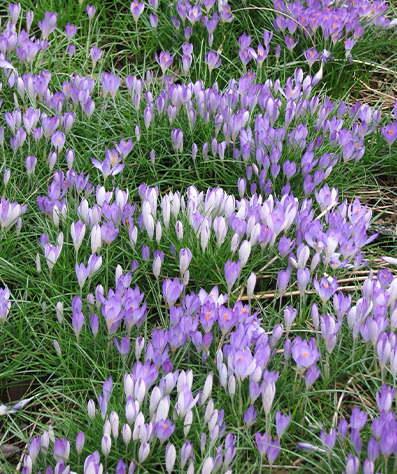


The larger group of Crocus are Crocus vernus. These produce flowers that are a bit larger and bloom a bit later than Crocus chrysanthus. Purchase them as individual cultivars and colors, or order a cool mix or warm mix, which includes yellow.

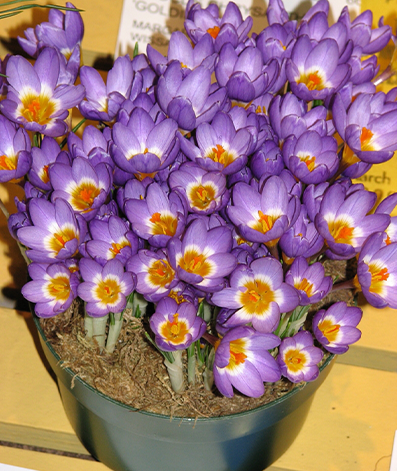
There are so many ways to “play with bulbs!” On the right is a pot of Crocus sieberi ‘Tricolor’ that won a blue ribbon at the Philadelphia Flower Show. The winner shared with us how much she enjoyed the process, and of course, she was happy to be the winner. All the visitors thought it was a very special Crocus container. While this type of activity takes planning, time, and a little bit of luck, it really is a fun way to get your hands in soil and get to know a different group of people who are also involved in this friendly competition!

You don’t have to enter a contest to enjoy the process of “forcing” a pot of Crocus to bloom. Keep them on your kitchen table, deck or patio. Crocus require exposure to cold temperatures for their flower buds to form. They should only need about 6 to 8 weeks in your “beer fridge” because they naturally bloom early, and their bulbs are small. We do have a few Crocus that we are pre-cooling for people who would like to try this as a winter project. Find them on our website as an online exclusive, or call to inquire about availability and place an order.

Here’s another project that can be lots of fun for children of all ages: dig a hole 3” deep in your “yard”—not the “lawn” if someone takes care of it for you, which often has pre-emergent chemicals that kill everything that isn’t grass. For the head of the happy face, we used yellow Crocus. To create eyes, we used light blue Crocus and purple dwarf Irises. For the mouth, we used early-blooming blue Muscari. It was so much fun to plant and even more fun to enjoy in the spring! You can even have your children write their names in the grass with Crocus or create other designs to enjoy. Just think of a huge area of grass as a blank canvas. We can’t wait to see the amazing pictures you’ll create!
After your Crocus flowers have faded, the Crocus leaves—which look very much like grass—will be difficult to see because they don’t grow very tall. We suggest that you set your lawnmower at the highest setting for the first few times you cut the grass. This will benefit the Crocus by allowing most of their leaves to gather energy to create next year’s blooms. It will also encourage your grass to create deeper roots, helping it become stronger and better able to find moisture deep in the soil during summer droughts that happen in many of the areas in our country. Have fun!

Take a look at our catalogue to see all the incredible varieties of Crocus for sale to plant in fall for spring blooms. To learn more about other spring-blooming bulbs to plant alongside Crocus, browse through Brent & Becky’s blog!