

We are often asked for a list of bulbs that will tolerate or thrive in the shade. We live in an area where heat and humidity would cause many plants to ask for more shade, but they may be just fine planted in cooler climates in full sun. Please keep that in mind as we are only speaking from our Tidewater Virginia gardening experience. No matter where you are planting them, we encourage you to use good compost when you plant new bulbs and plants in your garden.

Arum italicum ‘Marmoratum’ is one bulb that has been identified in some areas as an invasive plant. We have not had that experience here at all! Their lovely variegated leaves decorate our gardens during the winter. Their ‘jack-in-the-pulpit’-type flower sneaks above ground in the Spring, sometimes unnoticed, and their bright red berries ‘wow’ visitors during the summer months.
Birds do enjoy eating the berries and their droppings could replant them in some areas, but that has not happened in our gardens. If you live where the bird-planted Arum seeds germinate quickly and you are concerned, cut off the berries so the birds can’t eat them – the problem is solved! Arum is so special, that it would be a shame not to have this pest proof, tough, beautiful plant decorating all gardens during the winter as far north as zone 5!
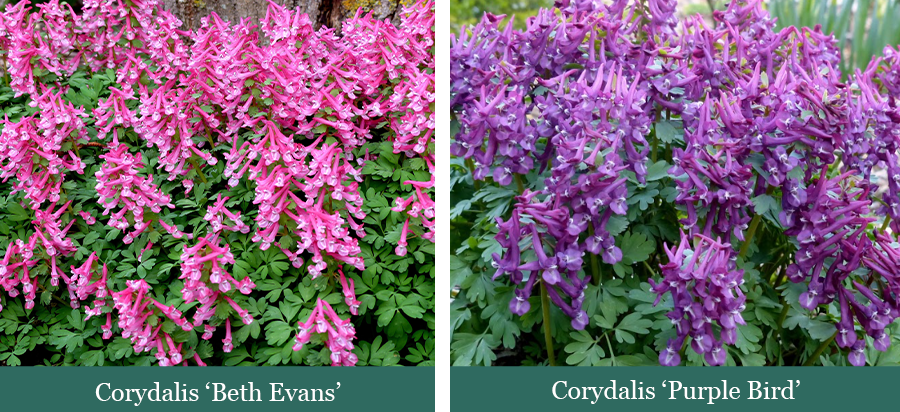
Corydalis is an amazing, dainty woodland plant with glaucous Fern-like leaves and longish tubular flowers with tiny Orchid-like tips. They make colorful mounds in a part shade area of the garden or in woodland areas in mid-late Spring. They are pest resistant and are available in pink, rose, white and purple. Corydalis are ‘site-specific’ and won’t grow in every location. They are happiest when growing in consistently moist but well-drained soil. If their site is too wet, they may rot. Gardeners appear to have more success with this awesome beauty in locations where Springtime weather lasts a long time.
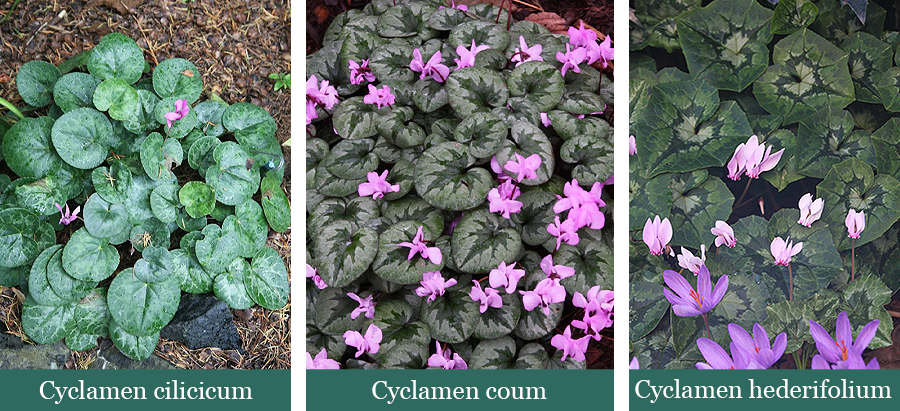
Cyclamens are one of our most satisfying bulbs for dry, shady areas. That doesn’t mean they are super easy. But it does mean that when they are established in their ‘happy spot’ and are left alone long enough for their natural developing processes to continue uninterrupted, they create glorious mounds of spectacular leaves and adorable flowers. Don’t deadhead the flowers of this plant as normally ants take their seed and replant them in other locations. This is not a process that happens quickly, but it does happen and is worth the wait! Cyclamen cilicicum and coum normally bloom in late autumn, winter to spring. Cyclamen hederifolium and hederifolium Album’ normally bloom in late summer to early winter. The leaves of Cyclamen are so lovely and are the part of the plant we notice the most.
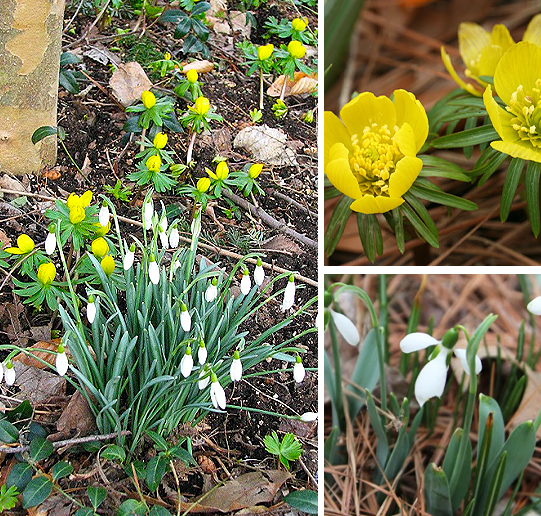
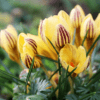
Galanthus are in the Amaryllidaceae family, just like Daffodils, which makes them pest proof. They grow best in shady or woodland areas and bloom here in late fall through winter and into spring. There are many types available, all of which have small white nodding flowers. Eranthis is a Buttercup relative with a frilly, green collar of leaves around their yellow flowers.
Nicknamed ‘Winter Aconite’, Eranthis grows best in a woodland setting in rich, moist soil. You can increase their colony by scratching their seed in the soil once they are ready to drop. There have been years when we did not see evidence of any Eranthis plants after we planted them. At the time, we assumed they don’t like growing in our area. The next year, they appeared in an area around the base of a tree where there was little or no gardening activity. Galanthus and Eranthis are both pollinator-friendly and naturalize when they are in their ‘happy spot’. Sometimes these tiny but very special plants want to be left alone to get established and ‘do their own thing’.
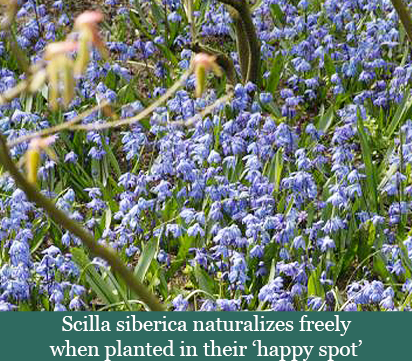
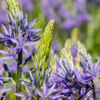
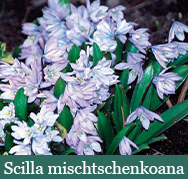
Scilla have pest resistant, starry flowers of bell-like blooms on spikes with strap-like leaves. They are offered in blue, pink, white and violet. There are many types in variable heights and bloom times. Many are winter hardy to zone 4 while others are meant to be growing in more moderate climates. All are adaptable for part to full shady gardens and woodland settings and often spread by seed freely.


Take a look at our fall-planting catalogue to see what we have available now!