

Without getting caught up in the structure of traditional floral arranging, you can easily make a kaleidoscope-style floral arrangement with whatever you have growing in your garden! A little of this, a little of that, and pretty soon, you’ll have yourself a gorgeous arrangement.
Let’s dream of next spring with these tips on how to remove your florals from the garden, how to arrange them, and how to make sure they bloom for a week or more.
What (Not) to Cut
“Fresh cuts” is a great term when referring to the flowers you cut from your garden. When cutting stems, be sure to have very sharp, clean shears (not kitchen scissors) so that the stem isn’t crushed and can still transport water. Cut at a 45-degree angle at the desired stem length.
Remember that not all plants should be cut! Some should be picked, such as Daffodils. Reach all the way to the bottom of the Daffodil stem, pull up and snap at the same time—the bottom of the stem will be solid white—this will allow the stem to retain water and nutrients. If you cut a Daffodil, the stem will be hollow and won’t be able to hold onto anything. (Note: The best time to collect garden flowers is when it is cool outside, so that the plant doesn’t get stressed.)
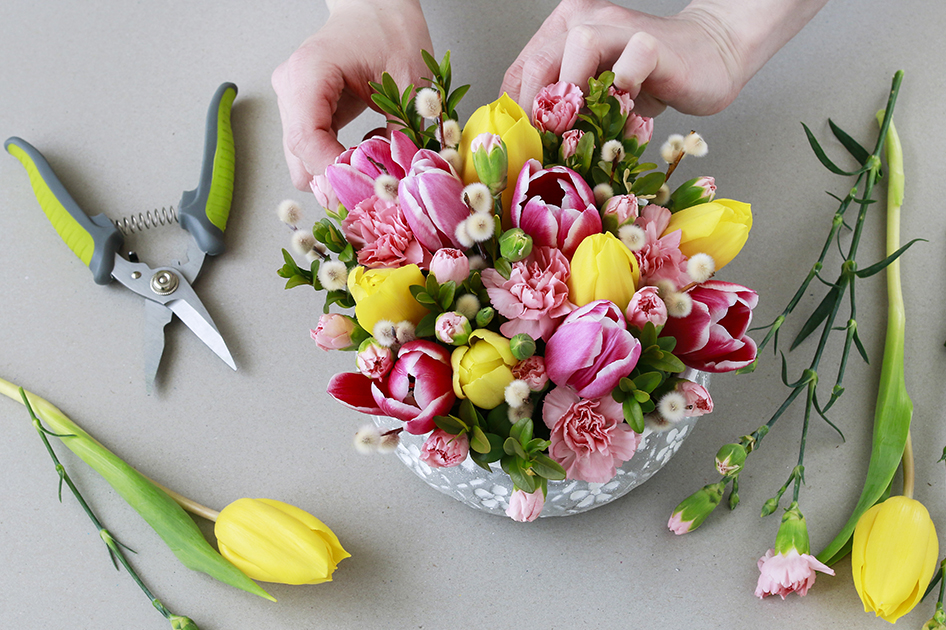
Bulb flowers are fantastic for making a floral arrangement. In fact, the majority of the bulbs grown in Holland are for cuts! Peonies, Dahlias, and Lilies are all fantastic options. Dutch Irises can be picked when the blooms are open or when they’re budding with some color. Serissa is a shrub with a long-lasting flower that is also lovely to include.
Thrillers, Spillers, and Fillers
Even a carefree, fun arrangement can follow some basic rules of arranging to make sure it looks fantastic. Add some tepid (warm to the touch) water in a vase, and then start adding your flowers and foliage!
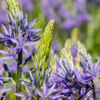
You can add nodding flowers for shape, Rye for stature and extension, Lavender for fragrance, Purple Leaf Lettuce for color, Baptisia, Catmint, shrub cuttings, or any other perennials that are in season—if you’ve got it in your garden, it can go into your arrangement! The beauty of a kaleidoscope arrangement is that you can include whatever you want and have fun with it.
Using the basics of incorporating thrillers, spillers, and fillers will make sure that whatever you include will be visually appealing. Thrillers are bold, statement flowers that catch your eye, such as Roses or Lilies. Spillers droop over or nod, to add shape and dimension. Fillers, such as foliage, shrub clippings, and clustered flowers fill in the gaps and help support everything else!
How to Keep Your Florals Happy
Cuts from the great outdoors can often use some help with defenses. Add a bit of Sprite for carbolic acid, which helps take care of any bacteria that might have migrated from the garden to the vase with your fresh cuts.
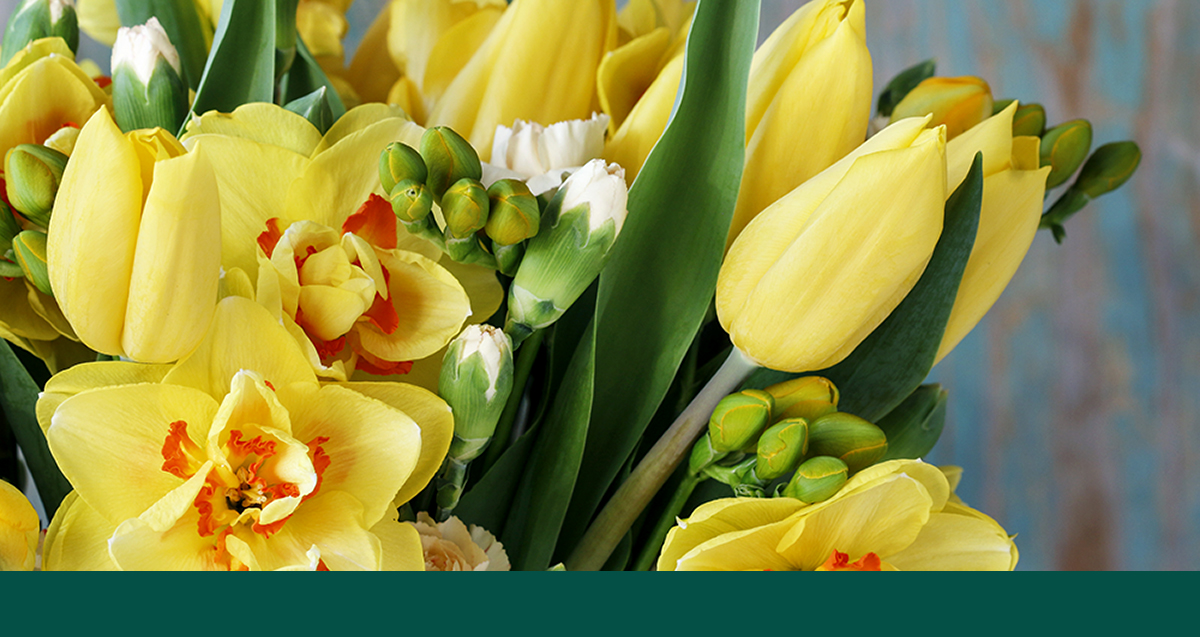
It’s said that Tulips and Daffodils don’t get along in a vase together, but that’s not entirely accurate. If you condition your Daffodils in warm water for half an hour before you add Tulips, they’ll absorb water and won’t gum up the stems of the Tulips.
To keep your Tulips happy and bright, pull them from the ground and wrap them with a little paper around the blooms, then refrigerate them for a while. This will help them stand straighter! You can also add Aspirin to the water to help cut down bacteria. Frequent water changing and recutting can also help keep them fresh and happy.
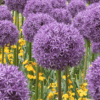
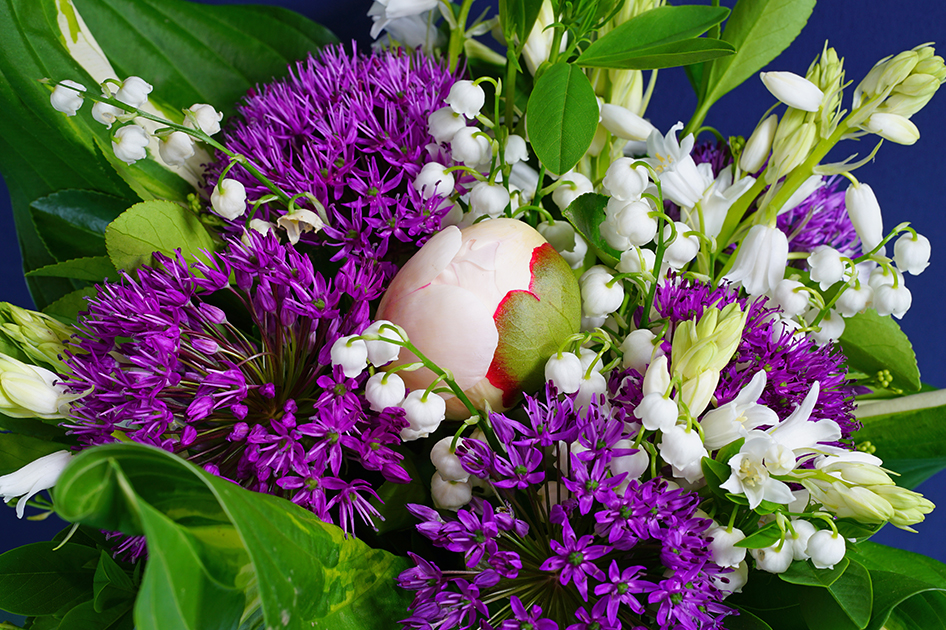
Alliums are another lovely addition to a bouquet. They are ornamental onions, so the smell can be off-putting for some people. However, with a couple of drops of bleach in the water, you can get rid of the onion smell and enjoy your beautiful blooms.