By: Brent and Becky
Prevention: Before You Plant
Common Pests
Slugs
Aphids
Four-Legged Animals
Two-Legged Animals
“If you truly love nature, you will find beauty everywhere.”
– Vincent Van Gogh
We love bulbs because they are one of the easiest ways to start a beautiful garden. Some of our favorite, classic flowers start as humble bulbs and quickly have your home and yard bursting with color and fragrance. As much as we love our bulb gardens, most seasoned gardeners know that some bulbs can also be a little too pest-friendly. The more that you know about common pests in your area, the more you can keep your home and garden safe, healthy, and blooming beautifully.

Your best protection against pests is prevention. Once pests make their way into your yard and garden, you’re fighting to get rid of them. You’re stuck minimizing damage, instead of avoiding it in the first place.
Prevention starts at the garden center and with the gardener. Make sure that you are selecting the best bulbs for your yard. Check over each of your selected bulbs for damage or infection. Problems like holes or damage might indicate existing issues. Check for bulbs that are soft or hollow, indicating rot. An unhealthy or rotting bulb won’t grow, so you will not only be disappointed not to see any blooms.
Our bulbs are all checked twice by hand for quality before we package them and send them out to our customers. If you are choosing bulbs in a local store, however, you’ll need to keep a more wary eye out to pick the best bulbs for your garden.
At any stage of growing, some your bulbs could be susceptible to pests. Some of these pests are commonly faced by gardeners everywhere, so we have figured out the best way to combat them while keeping our garden healthy and safe:
Slugs are more than just ugly creatures. They leave a slimy trail behind them as they explore your garden at night, taking bites out of your leaves. The damage that they leave behind is not only gross, but it could cause damage to your plants, resulting in rot.
The best tool to prevent slug damage to your garden is to make it as uninviting a habitat as you can. Keep your garden beds clean so that the slugs will have no shelter in the day from the hot sun. Clear up fallen foliage or rocks to make your garden not only look cleaner, but uninviting to these pests. Sprinkling some diatomaceous earth on your beds is a good second defence.
If you have a persistent slug problem despite these measures, try putting down boards near or next to your garden. The slugs won’t be able to resist crawling all over them, and you’ll be able to pull up the boards in the morning and douse the pests in soapy water to kill them. You might also create a slug trap with a shallow pool of beer, which will trick these slimy pests into drowning.
In our experience in tidewater Virginia, aphids have not been a significant pest to bulbs. But in your situation, if they are, they can go from an annoyance to a pestilence quickly because of the sheer numbers that they can produce. Aphids seem to pop up out of nowhere and cause damage as quickly as they appear. Aphids are like ticks, and will suck the juices from your plants and leave their droppings behind. Your plants will struggle under too many of these parasites, and their waste will cause any number of issues, from rot to mold, that could ruin your bulbs and plants.
Preventing these little armies from setting up camp in your garden is a good first defence. You can keep these pests at bay by staying vigilant with regular weeding and watering. If you notice any of these little pests, they can be easily knocked from your plants with a strong spray of water. If the problem persists or gets worse, insecticidal soaps are very effective. Ladybugs and nematodes also offer a fantastic natural defence against aphids, as they will hungrily devour great numbers of them. You can try to invite these natural predators into your garden, or get a quick boost by purchasing them at your local garden center.
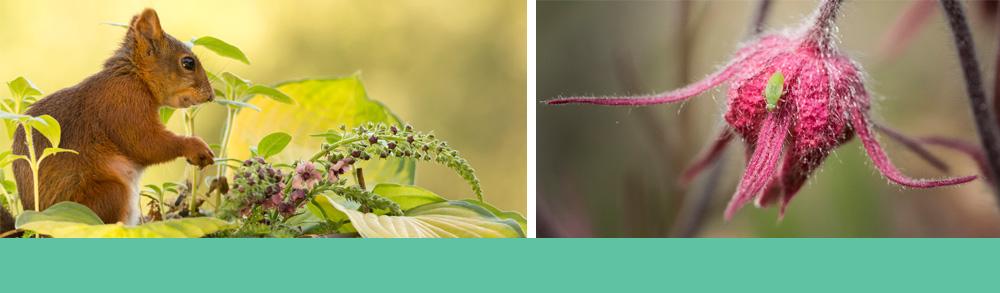
Your garden isn’t just at risk from tiny invaders. Animals could target your bulbs, too. Many rodents, like squirrels, love the taste of bulbs and the rich nutrients and energy they provide. They’ll eat some of your bulbs, but they can disturb areas of your garden in search of them. Deer also love the taste of certain bulbs as well as certain foliage and blooms. Even though they have a taste for most bulbs, they won’t bother certain bulbs like Amarcrinum, Arum, Bulbocodium, Colchicum, Daffodils, Galanthus, Leucojum and others. If you have critter problems, planting only these bulbs will solve your problem. But, if you prefer to add other colorful beauties that could be eaten, like Tulips, some customers have reported that planting the critter-proof bulbs with the rest of your edible bulbs seems to help to deter any curious critters. You can also try planting with protective bulb cages. It won’t stop the digging, but it will help to prevent your baby bulbs from getting dug up or damaged.

There are several non-poisonous critter deterrents available at most good garden centers. One November afternoon, we had a wonderful time designing a ‘LOVE’ garden, which actually spelled that word. We planted red tulips, white daffodils, blue muscari (grape hyacinths) and topped the planting with dark blue pansies. It looked really beautiful. We went out a few days later to admire our work and saw that the pansies were only stubs – they had been eaten to the ground. We assumed that the rabbits had gotten to them but wasn’t sure. We had just started offering a product called ‘Plantskyyd’, which comes in a granular form and in a form that can be mixed with water to be sprayed. This is one of the non-poisonous deterrents mentioned earlier. We sprinkled the granular Plantskyyd all around the pansies and fortunately they grew and bloomed again. The following June, they were still there – over six months later. Will that work for every critter and every plant? Probably not. We ‘two-legged animals’ often order different food types when ordering in a restaurant – why do we think all deer, rabbits, squirrels and voles have the same plant favorites? So we try to have several types of non-poisonous deterrents on hand and try to use different things – it keeps the critters guessing! One of our customers makes a mixture of 6 eggs, cayenne pepper and dish soap and sprays his lilies every other week and he has no problem with deer eating his liles.
In our experience, more bulbs stop blooming because their green leaves are cut too early and were not given the necessary 8 weeks of sunlight after they finish blooming to gather the energy to create the blooms for the following year. Or because sun-loving bulbs are planted in an area that doesn’t get enough sunlight (8 weeks) after they have flowered, because the trees leaf out, shading the area. We think more bulbs disappear in gardens because when they are dormant (sleeping underground), the gardens continue to be watered even when it’s not dry. Spring flowering bulbs especially can rot in the summertime heat in a wet flower bed. Planting drought tolerant summer blooming perennials in the flower bed with the spring flowering bulbs should utilize the moisture from the summer rains, which is helpful. Automatic irrigation systems with a switch that can be turned off when it isn’t needed is preferable.
For most gardeners, pests are the ultimate irritation. Dealing with them can be stressful and lots of work, but without it you risk seeing your beautiful garden get disturbed by hungry pests. The best first step is knowledge and prevention. By working to keep them out and take them down if you have to, your bulbs will be free to grow healthy and beautiful.
Order Online from Brent & Becky’s today!
Questions: (804) 693-3966
Toll-free Ordering: (877) 661-2852












Welcome to Brent and Becky’s website.
If this is your first time visiting our website, please register prior to logging in. Please feel free to call our toll free number 1-877-661-2852 for assistance.
Once you have registered, any subsequent visits will only require you to log in.
Thank you for visiting Brent and Becky’s!!


| Icon | Description |
|---|---|
 |
Pollinator friendly plants, may include butterflies, bees, hummingbirds, beneficial insects and more! |
 |
Long bloom time |
 |
Resistant to critters, may include deer, rabbits, voles, etc. |
 |
Those items that are known to be inedible to critters |
 |
Drought tolerant once established |
 |
Full sun |
 |
Part sun |
 |
Shade |
 |
Fragrant flowers and/or foliage |
 |
New item for this season |
 |
A favorite of Brent and Becky’s as it has consistently performed well in the gardens year after year |
 |
Available again this season after being gone for a while |
 |
Denotes an item that is shipped as a plant in a 4″ pot and may have extra shipping charges |
 |
Indicates any items that have special cultural requirements. We will send cultural instructions with your order so you will know how to properly plant and take care of all of the items you have purchased. |
 |
Has been awarded the Wister Award. |
 |
Have been awarded the Pannill Award. |
| whz | Winter hardiness zone, if you live in a planting zone that is indicated, then these items should be perennial for you. |