
We’re blooming with orders! 🌸 Although your acknowledgment shows 7–10 business days, shipping is currently taking 10–12 business days from the process date. Thank you for your patience and support!

We’re blooming with orders! 🌸 Although your acknowledgment shows 7–10 business days, shipping is currently taking 10–12 business days from the process date. Thank you for your patience and support!

Toll Free: (877) 661-2852
Log In

Due to high order volumes in our warehouse, please note that any new orders will not ship until after Thanksgiving. Your order confirmation will indicate a 7-10 business day shipping timeframe from the processing date, but please expect delays. Thank you for your patience and understanding during this busy season!

We’re blooming with orders! 🌸 Although your acknowledgment shows 7–10 business days, shipping is currently taking 10–12 business days from the process date. Thank you for your patience and support!

Learn More. Grow More.

March 26, 2019

Do Daffodils Spread?

the bulb blog brent & becky's

daffodils header


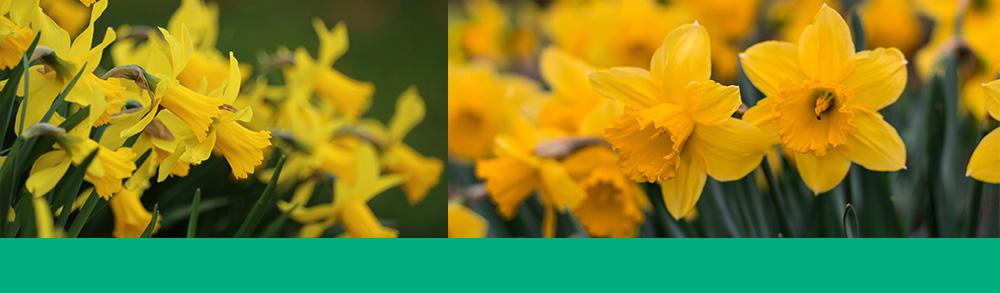
As captivating as they are, it’s no wonder we’d all want more daffodils in our yards. They’re beautiful, come in a wide array of colors, and are pest-proof! However, is the only way to get more of these fabulous flowers by buying more bulbs to plant? Or do daffodils spread all on their own?


Will Daffodils Spread?

Anyone who has ever planted a spreading plant, like lily-of-the-valley or creeping phlox, will know that these plants require little to no help in multiplying throughout our landscapes. In fact, they’re so good at it, our concern is more often not about how to get more of them, but how to keep them contained. So, while it can be a headache for those flowers you may not want more of, it’s understandably desirable for those blooms you just can’t get enough of – like daffodils.

Unfortunately, the spreading habits of daffodils aren’t exactly the same as those famous multiplying masters expanding to the furthest reaches of our gardens. However, this doesn’t mean they won’t multiply at all. In fact, daffodils can actually multiply in 2 different ways.

The first way that daffodils can multiply is through seed production. If properly pollinated, daffodils will grow seeds in the seed pods behind their petals, which can be replanted to grow into the beautiful flowers we know and love. However, this rarely happens in its own. Daffodil pollen is too heavy to be windblown, and there isn’t nectar to attract pollinating insects. Most pollination would have to happen by hand. And then from seed to first bloom can take 5 – 7 years! So, if you want to hand pollinate, you’ll need to be patient.

The second way that daffodils can multiply is through bulb division. This is when new bulbs form from the original bulb, forming a “daughter” bulb underground. Still attached to the same main bulb they came from, these new bulbs will not conventionally spread throughout the garden as other spreading flowers might. Instead, they will just continue to bloom with more foliage and flowers in the same clump. However, they can be spread around the garden with a little help from us in the form of dividing and transplanting.


growing daffodil bulbs


Divide and Conquer?

While entirely possible and a great way to disperse more daffodils throughout your yard, dividing your daffodils is not usually necessary. But as daffodils continue to multiply, some gardeners may notice they aren’t blooming with their regular enthusiasm or that they have stopped altogether. This can be a sign of overcrowding and most gardeners feel it’s time to dig and divide. When in actuality, it’s not necessary.

The “crowded” bulbs are competing for food and there’s just not enough to go around! So, by feeding well every Fall, you can save your time and your back! Feeding the bed with a 2” – 3” layer of compost every Fall will do the trick! Why compost? It’s perfect! You can’t overdo it or risk burning or over stimulating the bulbs. Chemical fertilizers are like sugary, caffeine-filled sodas, whereas compost is like eating an orange or a banana.

But, if you’re a purist and feel that digging and dividing would be best, here’s the 4-1-1 on how to do that. According to a University study, the best time to divide your daffodil bulbs is 8 weeks after the blooms have finished, or as the foliage begins to yellow. Start by using a shovel or garden fork and gently dig around the bulb cluster – being careful not to damage it – and lift it out of the soil. Once you’ve got it out of the ground, gently shake off and remove any excess soil to get a clear view of where the individual bulbs lie.

To begin dividing, simply grab one of the new bulbs and gently twist and pull it away from the main bulb. If it continues to cling, even with a little encouragement, don’t try to force it. Stubborn bulbs may not be ready to let go just yet. Leave them for another year or two, and you could end up with stronger, healthier bulbs to work with overall!

Once your bulbs are divided, take a moment to go through them all and toss away any that feel soft or mushy to the touch. With your healthy, happy bulbs in-hand, you can get straight to transplanting!


subscribe to our newsletter


Transplanting Daffodils

To transplant your daffodil bulbs, wait until the foliage has begun to yellow before starting. Once you’re ready, dig a hole 3 times the bulb height deep. Remembering that the bulb and the white part of the stem should remain under the soil line. 
Since the foliage is already going dormant, you can either let it die back on it’s own or you can cut it after transplanting. Don’t worry about watering as the bulb is dormant at this point, won’t use any of it, and the excess moisture adds to the risk of rot.


growing daffodils


Storing Daffodil Bulbs

As spring-bloomers, daffodil bulbs are typically best planted in fall. So, if you’d prefer to stick to that and store them until then for replanting, here’s how:

Air circulation is a must! So, start by laying out your bulbs on some screen or in mesh bags in a dry, shady area. Then, dust off any excess soil and trim off the dead stems. Then, store them in a warm, dark, and dry place for the Summer and you’ll be all set to go until planting in Fall.


While daffodils may not spread out to span the furthest reaches of your garden all on their own, we can certainly take advantage of their natural ability to multiply to bring their beautiful blooms to every corner of our beds. With a little dividing and transplanting, we’ll have no trouble spreading their sunshiney aesthetic throughout our landscapes. All it takes is a little work for a whole lot of impact!


Recent Articles

NEW BLOOMS FOR 2026

Subscribe Today

By signing up here, you’ll be able to hear from us regarding gardening tips and tricks, product details and sales announcements customized just for you!

So, sign up below, and we’ll take care of the rest!​

* indicates required

Celebrating 125 Years Together

Thank you for being part of our journey.

For 125 years, we’ve had the privilege of serving you—our valued customers. What began as a simple catalog has grown into a cherished tradition, connecting generations through quality, service, and trust.

This milestone wouldn’t have been possible without your loyalty and support. As we celebrate this remarkable anniversary, we’re reminded that you are at the heart of everything we do.

Here’s to the past, the present, and a future filled with possibilities—together.

With gratitude,
Brent and Becky, Jay and Denise and the entire staff

IconDescription
Pollinator friendly plants, may include butterflies, bees, hummingbirds, beneficial insects and more!
Long bloom time
Resistant to critters, may include deer, rabbits, voles, etc.
Those items that are known to be inedible to critters
Drought tolerant once established
Full sun
Part sun
Shade
Fragrant flowers and/or foliage
New item for this season
A favorite of Brent and Becky’s as it has consistently performed well in the gardens year after year
Available again this season after being gone for a while
Denotes an item that is shipped as a plant in a 4″ pot and may have extra shipping charges
Indicates any items that have special cultural requirements. We will send cultural instructions with your order so you will know how to properly plant and take care of all of the items you have purchased.
Has been awarded the Wister Award.
Have been awarded the Pannill Award.
whzWinter hardiness zone, if you live in a planting zone that is indicated, then these items should be perennial for you.

Find Your Winter Hardiness Zone

Hardiness zones help gardeners determine which plants are likely to thrive in a particular region, considering the local climate conditions. 

Enter your zip code to find your zone.

Sorry, a zone was not found for that zip code.

Your Zone is
10

Product name

Price

Group Quantity

Description

Item Number

Table Data
Add to cart
Product Total:

Notifications

Additional Shipping

Additional shipping charges for orders sent to locations West of the Rocky Mountains after Oct. 25th.  Orders shipped West of the Rocky Mountains after Oct. 25th have a possibility of freezing in transit.  In order to eliminate that possibility, 3rd Day Shipping is required.  This chart shows how much extra shipping will be added to your if the order is being sent after Oct. 25th.  Please note that the charges are determined first by the state and then by the number of bulbs being ordered.  Please check the chart to determine if you will be charged an additional amount.  For example:  Select the state where the bulbs will be shipped (i.e. CA).  Count the number of  bulbs being ordered (100  daffodils, 100 tulips, 100 crocus and 10 hippeastrum would equal 310 bulbs).  The additional shipping charge for 310  bulbs to CA after Oct. 25th would equal $49.00. 

Any shipments being sent to AK or HI are charged actual cost of UPS or FDX 2nd Day Air; $15 minimum.  This cost is unknown until after the order has shipped.

State300 TO 499 Bulbs500+Bulbs
AKcost after shipmentcost after shipment
AZ$49.00cost after shipment
CA$50.00cost after shipment
HIcost after shipmentcost after shipment
ID$49.00cost after shipment
MT$49.00cost after shipment
NV$49.00cost after shipment
NM$45.00cost after shipment
ND$45.00cost after shipment
OR$50.00cost after shipment
SD$45.00cost after shipment
UT$49.00cost after shipment
WA$50.00cost after shipment

Live plant shipping cost

Live Plant Shipping Information:  Live plants require special shipping status to make it from us to you in good condition.  All plants must be shipped 3rd Day Select by UPS or FedEx to ensure that they are ready to go into your garden when you receive them.  This chart shows how much extra shipping will be added to your order when ordering live plants.  Any shipments being sent to AK or HI are charged actual cost of UPS/FedEX 2nd Day Air: $15 minimum.  This cost is unknown until after the order has shipped.

Example for calculating shipping:  Select the state we will be shipping to, ie. CA;  count the quantity of plants you are ordering, ie, 4; the additional shipping charge for 4 plants being shipped to CA would equal $15.00.

State with extra charge1 or 2 plants3 to 5 plants6+ plants
AKcost after shipmentcost after shipmentcost after shipment
AZ$6.50$14.00$24.00
CA$7.00$15.00$25.00
CO$6.50$14.00$24.00
HIcost after shipmentcost after shipmentcost after shipment
ID$6.50$14.00$24.00
MT$6.00$12.50$22.00
NE$7.00$15.00$25.00
NV$6.50$14.00$24.00
NM$6.50$14.00$24.00
ND$5.50$12.00$21.00
OR$6.50$14.00$24.00
SD$7.00$15.00$25.00
UT$6.50$14.00$24.00
WA$7.00$15.00$25.00
WY$6.50$14.00$24.00
PUERTO RICO$7.00$15.00$25.00

Spring-planted items available for purchase now!

All hardgoods, including books, gardening tools, gloves, and gift certificates are always available for purchase.

Fall-planted bulbs, perennials and tropicals will be available mid-Summer to Fall of 2022.

Request Catalogue

USA and Canada addresses only please, Thank You!

Please note:
There is no need to request another catalogue if you have ordered with us or received a catalogue in the past, one will be sent to you automatically.