

Warmer, southern climates are a wonderful place to grow a beautifully vibrant garden with a tropical vibe. When it comes to planting in the United States’ warmer zones, you have plenty to choose from when it comes to bulb selection. However, you don’t have to live in a ‘southern area’ or ‘warmer zone’ to grow summer bulbs or tropical plants. In USDA Hardiness zones 7–9, we plant earlier because the soil warms up earlier, but if you’re growing in zones 4–6, you can grow gorgeous tropical plants too—just only during the summertime. Here are our recommendations for the warm season or warmer climates!
Typically, most bulbs prefer well-drained soil, and your soil quality can pretty much always be improved by adding some compost into it.

The Oriental Trumpet Lily
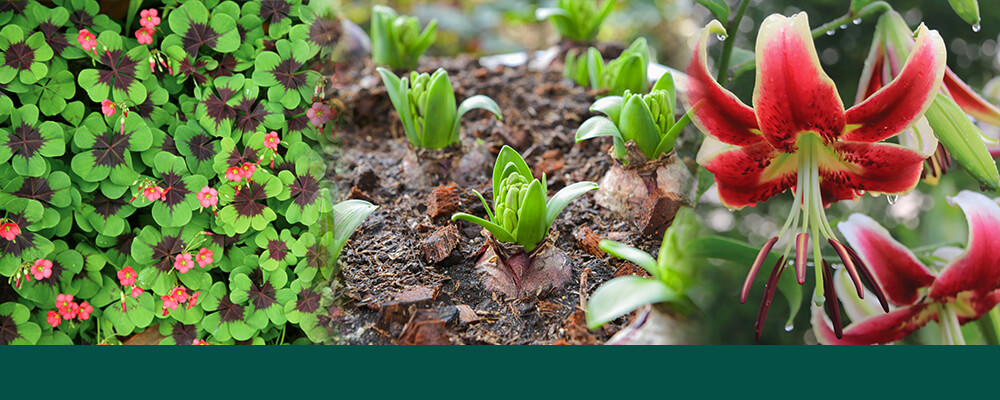
This fragrant plant, a hybrid between an Oriental Lily and a Trumpet Lily, will bloom beautifully in a warmer climate, but prefer to be planted in cool soil—they’re quite hardy! These babies bloom around mid to late summer and take on the best qualities of both parents. The blossoms come in both single and bi-colors with a relatively open flower shape.
Amarcrinum
Amarcrinum, also known as a Hardy Amaryllis, blooms well throughout most of the southern half of the United States quite well. It is a reasonably large, hardy member of the Amaryllis family that blooms late in the summer with clusters of pink, funnel-shaped flowers. This plant will not offer you any instant gratification, but like a fine wine, it will just get better over time if planted in the right location.
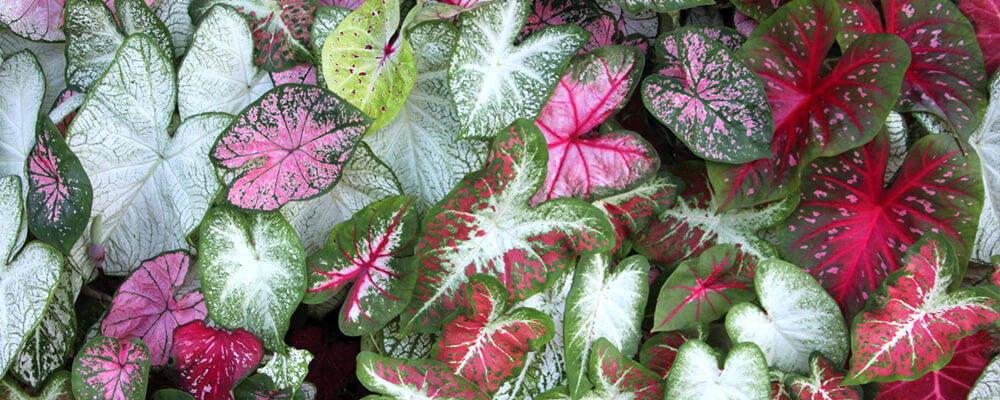
Caladiums
Caladiums, which are part of the Elephant Ear family, love the summer heat but are also a shade-tolerant plant. This makes them an excellent choice for that pesky shady corner where others might not thrive so well. There is a fair bit of pattern variety in Caladiums, with most of their large, colorful, critter-resistant leaves coming in varying shades of deep greens, dark reds, and brilliant pinks.
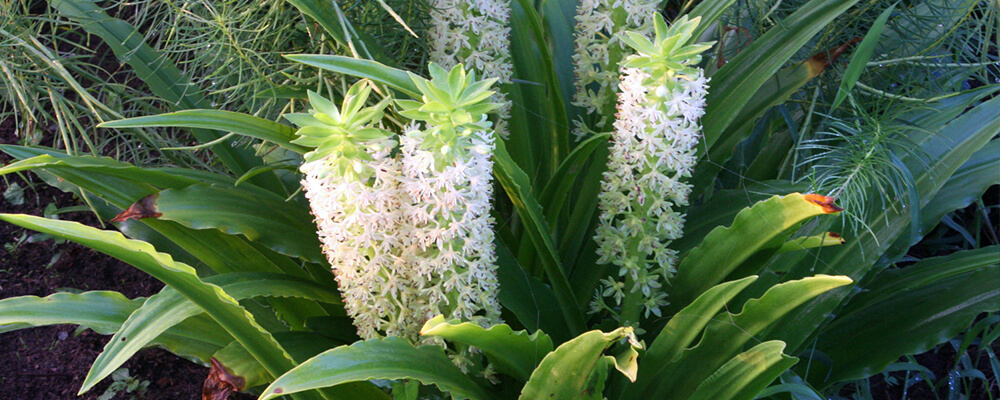
Pineapple Lily
Eucomis, also known as the Pineapple Lily, bears its nickname thanks to the unique shape of its flowers, which resemble a pineapple. Originating from South Africa, these critter-resistant plants thrive in the hot summers of the south. They are also happy growing in pots, where they can get taken inside during the cold winter months. Their flowers last for quite some time, and even after flowering, their seed cases remain quite attractive, so they are really a plant that will shine all summer long.
Gladiolus
While somewhat common, Gladiolus are still worth an honorable mention when it comes to plants to consider in a southern landscape. They come in every color of the rainbow, and if planted in two-week intervals until mid-summer, you can have continuous blooming all summer long. This is a great strategy if you use Gladiolus for cut flowers!
Bananas!
Yep, you read right. While they do not produce edible fruit, some Banana Plants are hardy all the way up to zone six and one to zone four. They have big, bold leaves, which will bring a definite tropical vibe to any garden, and the leaves can even be used for cooking.
Our Musa Gran Nain Banana Plant produces edible bananas with a long enough season. It grows best in zone 8–11 in full to part sun. The Musa Zebrina (Rojo) Banana Plant does not produce edible fruit, stays smaller in containers, and is suited to zones 9–11. Lastly, the Musa Basjoo, or Japanese Banana Plant, is the most cold-hardy, suited to zones 4-11 and does not produce edible fruit.
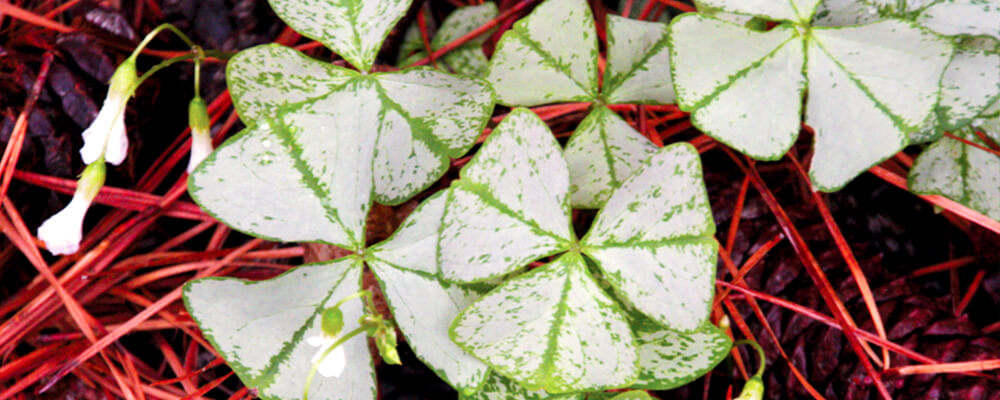
Oxalis
While small in stature, Oxalis (also known as Shamrock or Wood Sorrel) make a great option if you are looking for ‘shoes and socks’ for your garden, Oxalis triangularis come with beautiful pink and white flowers and three leaves, some of which have a greyish tinge to them. Oxalis tetraphylla, on the other hand, has four leaves and a neat little burgundy center.
Polianthes Tuberosa
Originally hailing from Mexico, Polianthes Tuberosa (or Tuberose) is one of the sweetest, most fragrant summer bulbs. They generally don’t bloom until later in the season, around August to October, but they can bloom earlier and seem to last forever when they overwinter.
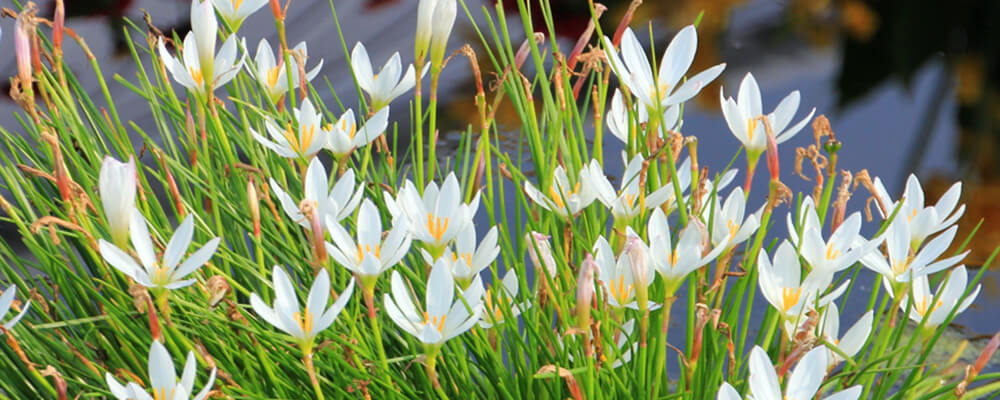
Zephyranthes
Zephyranthes, or rain lilies, are another beautifully unique plant that will thrive in a warmer climate. Though called “rain lilies,” these are part of the Amaryllidaceae family—the same as daffodils. Pollinators enjoy them, they are pretty much completely critter-proof, and they are very moisture tolerant. They will grow well in a pot in a water garden, and fascinatingly, rather than blooming once like many other summer-flowering bulbs, these particular critter-proof flowers will bloom over and over again throughout the season. The reason for this, and their nickname, is because every time it rains, the ozone given off by a thunderstorm, in particular, will trigger them to bloom again.
When to Plant in Warmer Zones
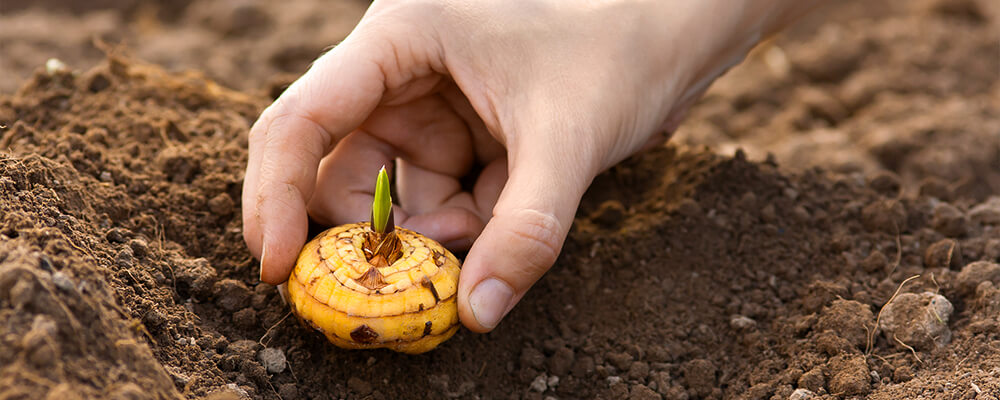
Most of the bulbs that we have listed prefer warmer soil, but being from a warmer climate, you can plant a little earlier than those who live in cooler zones. Regardless of what zone you are planting in, the best time to plant is once the soil has reached 50 degrees or warmer, and when the danger of frost has passed.
Soil Requirements
Typically, most bulbs prefer well-drained soil, and your soil quality can pretty much always be improved by adding some compost into it. If you have wet, heavy soil, this is important to note. Dahlia’s, for example, are hardier plants if they stay dry enough in the wintertime, but not hardy in zones 3–5, even if they are in pure sand. If the soil they are grown in stays wet in the wintertime, it could cause them to catch a fungus and rot. Growing them in, say, a raised bed may alleviate this issue and allow the soil to drain a little better.

We hope all of this talk of summer-flowering bulbs has gotten you just as excited as we are about the upcoming season!