


I haven’t had a “lawn” in a long time, and I’m glad to see others are starting to do the same. The difference between a lawn and a yard is typically lawns are highly manicured and fertilized, and a yard is just an area of random grass. And, as far as I see it, a monoculture of grass doesn’t do us, or our pollinators, all too much good—I’d rather see that space teeming with plants and flowers. While many of the plants growing in my yard are naturally occurring, many are ones that have naturalized in my landscape over time. We often point out plants that naturalize well in our catalogues, but I’ve noticed this term is often misunderstood. I thought it might be helpful to take some time to explain what naturalizing really means, why it matters, and which plants do it best.
What Does “Naturalizing” Mean?
By definition, a naturalized plant is a plant that is not native, but reseeds, spreads, and may attract pollinators. Some non-native plants also perennialize – come back year after year. Many native plants are very attractive to pollinators, perennialize, and some set seeds.

Daffodils: A Case Study in Naturalizing
Many naturalized plants were brought here by European migrants, where the climate is comparable. Back in those days, European ladies figured out that you could bring dormant plants on the long journey across the ocean. One such plant was Narcissus pseudonarcissus, a Wild Daffodil. These plants were capable of self-pollinating, so the local insect population wasn’t needed for the plant to reproduce by seed and flourish parts of in the United States. These Daffodils managed to naturalize very successfully, particularly here in the Gloucester, VA area, where they grow in abundance.
Some species of daffodils self-pollinate and reseed in some areas of this country. However, most hybrid daffodils are not visited by pollinators, and they do not self-pollinate or reseed. Many of those hybrid daffodils do perennialize returning and multiplying by division year after year, making larger clumps but don’t spread.
Role of Naturalizing Plants in the Landscape
Nature thrives on diversity and balance. A variety of plant species supports an even larger array of wildlife by providing the food and shelter sources needed for survival. Naturalized plants, by definition, support biodiversity by providing pollinators with pollen and adapting to the surrounding environment. By behaving like native plants, these plants can thrive within the landscape with little maintenance, and eventually replenish the soil as they complete their life-cycles. Some naturalizing plants that out-compete native plants are considered invasive in some situations and should be avoided if they are invasive in your area. Others, like most bulbs, can add beauty and value to the landscape without being considered a detriment.
Brent’s Favorite Naturalizers
There are many ways to incorporate naturalizers into the landscape; some plants do well in beds and borders, and others are nice for adding some color and diversity to a traditional lawn, shrub border, or open woods. Here are a few I’m particularly fond of that you can find in our fall-planted catalogue.
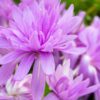
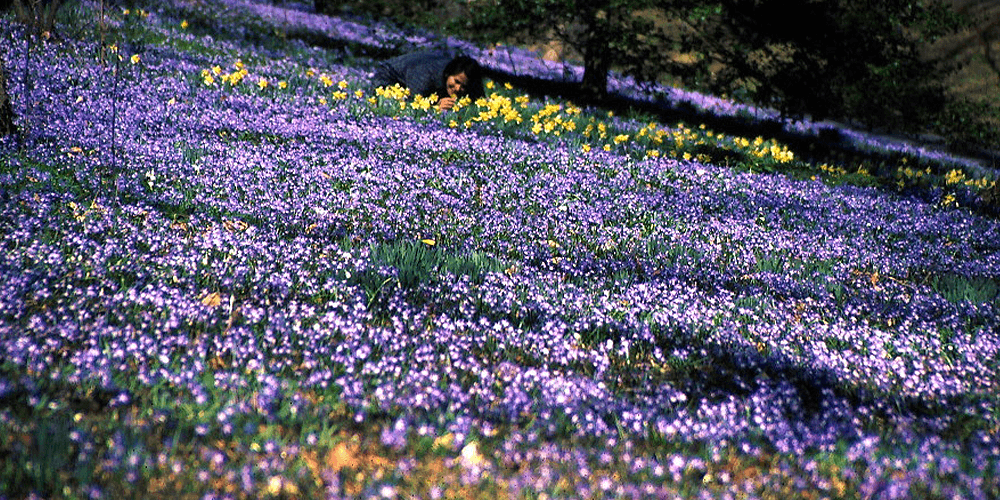 Chionodoxa forbesii: This fun little bulb comes in a range of pretty pastel colors like periwinkle blue, baby pink, and cream. These short ‘n sweet flowers are critter resistant, shade tolerant, and excellent for brightening up sunny lawns or part shade woods. Heights range from under 3″ up to 6”, winter-hardy to zones 3-8.
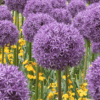
Allium: Alliums naturalize so readily they can get a little out of hand in some situations! The smell of these ornamental onions turns off the critters, so by the time they set seed, there’s plenty to go around. Alliums do especially well in climates with cool weather and hot, dry summers. They range in heights of 6” – 36”, winter-hardy to zones 5-8.

Galanthus: I’m so fond of this plant, which is charmingly nicknamed “Snowdrops.” A sweetly fragrant early spring bloomer, this beauty attracts pollinators and looks wonderful paired with most other flowers. Galanthus naturalizes very well in the northeastern and northwestern states. 4″-5″; it’s shade tolerant and critter-proof; winter-hardy to zones 3-8.
Hyacinthoides: These ‘Spanish Bluebells’ naturalize and thrive in many parts of our great country. They are shade tolerant, are critter resistant, and come in a pallet of blue, white, and pink. 8”-12” tall; winter hardiness zone 4-10.
Ipheion: Ipheion is one of the best naturalizers, and it’s absolutely adorable for decorating the lawn. Nicknamed “Star Flower,” it’s fun to find its grass-like leaves nestled between the grass blades. The flowers smell lovely unless you crush them, which releases a pungent “garlic breath” scent. For this reason, critters tend to stay away from them! 2″-4″, winter-hardy to zones 5-9.
 Tulipa sylvestris: Many tulip species can naturalize, but they require plenty of patience. If you leave the whole flower and superior ovary, they will enlarge and set seeds, but it can take 4-5 years from seeds to blooms. This woodland variety naturalizes much more readily with stoloniferous roots, and while not as showy as other tulip cultivars, it’s a charmer with great fragrance. Part shade tolerant; 8″-12″, winter-hardy to zones 3-8.
Ornithogalum: Nicknamed Silver Bells or Star of Bethlehem, this is another excellent naturalizer that is conveniently critter-resistant. The showy flower spikes can be picked for lovely bouquets and arrangements. This one is somewhat underrated, but it’s likely to become one of your favorites. 12″-15″, winter-hardy to zones 5-8.

Happily, this is only a small sampling of the naturalizing plants in our lineup for the fall. Remember, these are plants that reward patience. By planting a drift in the fall, you’ll be giving your future self a gift that appreciates (and will be appreciated!) the longer it matures and spreads.